Warning: Undefined variable $post in /home/quantdev/thechangelab.stanford.edu/wp-content/themes/lagunita-theme/Lagunita.php on line 124
Warning: Attempt to read property "ID" on null in /home/quantdev/thechangelab.stanford.edu/wp-content/themes/lagunita-theme/Lagunita.php on line 124
Risk Communication in Real Time: Examining Individuals’ Smartphone Use During the 2021 Texas Winter Disaster With Mobile Sensing
Michelle Ng, Yikun Chi, Johannes Eichstaedt, Byron Reeves, Thomas N. Robinson, and Nilam Ram
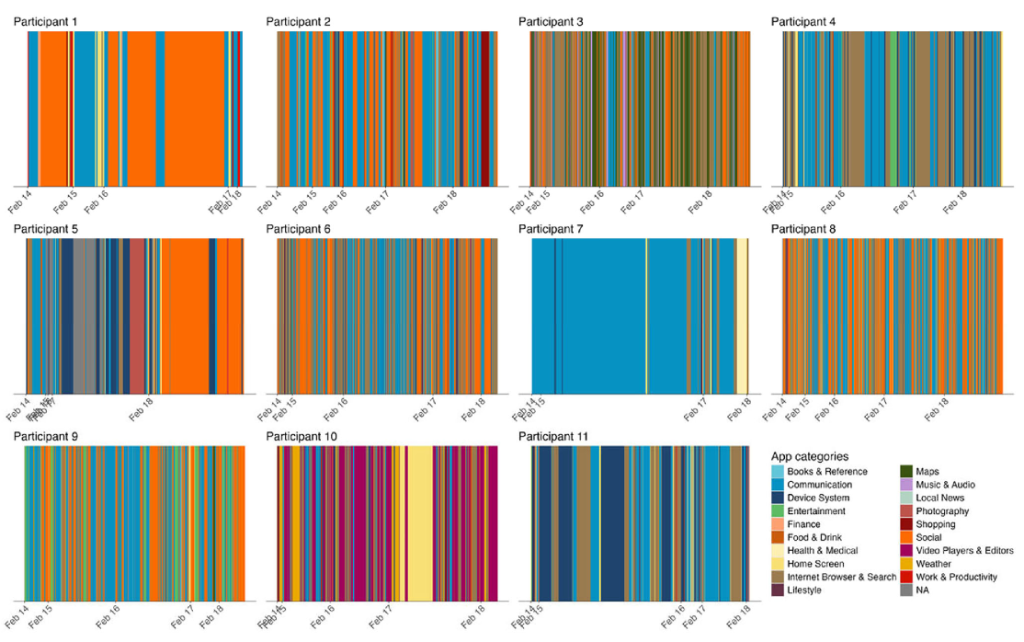
Risk communication can support people in making timely, well-informed behavioral decisions during extreme weather events. Today’s information environment has revolutionized how individuals engage with risk communication, as they see and share more information than ever before. It is not yet known how much risk communication any specific individual encounters, where it comes from, what messages it contains, and when it is received over the course of evolving extreme weather events. In this study, we provide a detailed description of how individuals encounter risk communication during extreme weather events by analyzing comprehensive records of all the content that 11 adults viewed on their smartphones (n = 162,418 screenshots collected via mobile sensing) over 5 days of the winter disaster that struck Texas in February 2021. Participants viewed substantial amounts of risk communication, which comprised, on average, 21% of their total smartphone use during the winter disaster. Most risk communication was accessed through participants’ social networks, primarily through personal messaging apps (M = 33%) and social media apps (M = 22%). Risk messages contained updates, actionable advice, social support, sense-making, and recreation and humor, the specifics of which evolved over the course of the winter disaster. Taken together, our results demonstrate how individuals engage with risk communication in dynamic, heterogeneous, and socially embedded ways during extreme weather events—opening new possibilities for risk communication theory and practice.

![Honors Posters at Symposium of Undergraduate Research and Public Service [April 25, 2026]](https://thechangelab.stanford.edu/wp-content/uploads/2026/04/Garg_SURPSVig_20260425-300x95.png "Honors Posters at Symposium of Undergraduate Research and Public Service [April 25, 2026]")