

News & Updates
Risk perception, but not response efficacy, linked risk communication to protective action during an atmospheric river in California
2026-10-05 5:41 PM
As the atmospheric river approached and made landfall, we surveyed 513 at-risk adults twice daily over one week (n = 5,099 observations) and applied preregistered Bayesian within-person mediation models to the resulting intensive longitudinal data. We found that when participants received more risk communication than their personal average, they were more likely to take protective action...
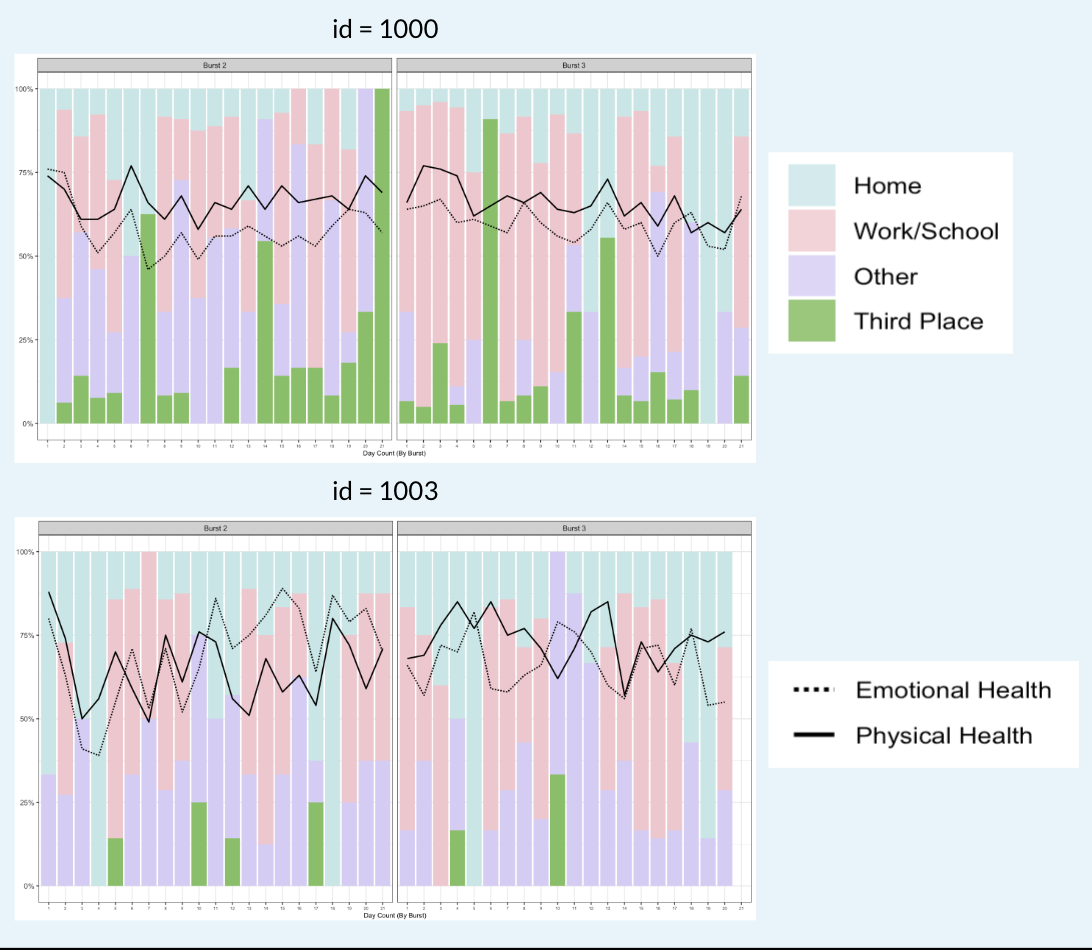
The Geography of Health: Exploring How Engagement With Third Places Shapes Perceived Physical And Emotional Health
2026-09-28 6:13 PM
Studies examining quality of life have shown that environmental factors and qualities, including third places, are significant determinants of physical and emotional health (Zhao and Chung, 2017). Understanding the health implications of third places requires moving beyond accessibility of these places to considering how individuals actively engage with and use third places in their daily lives...
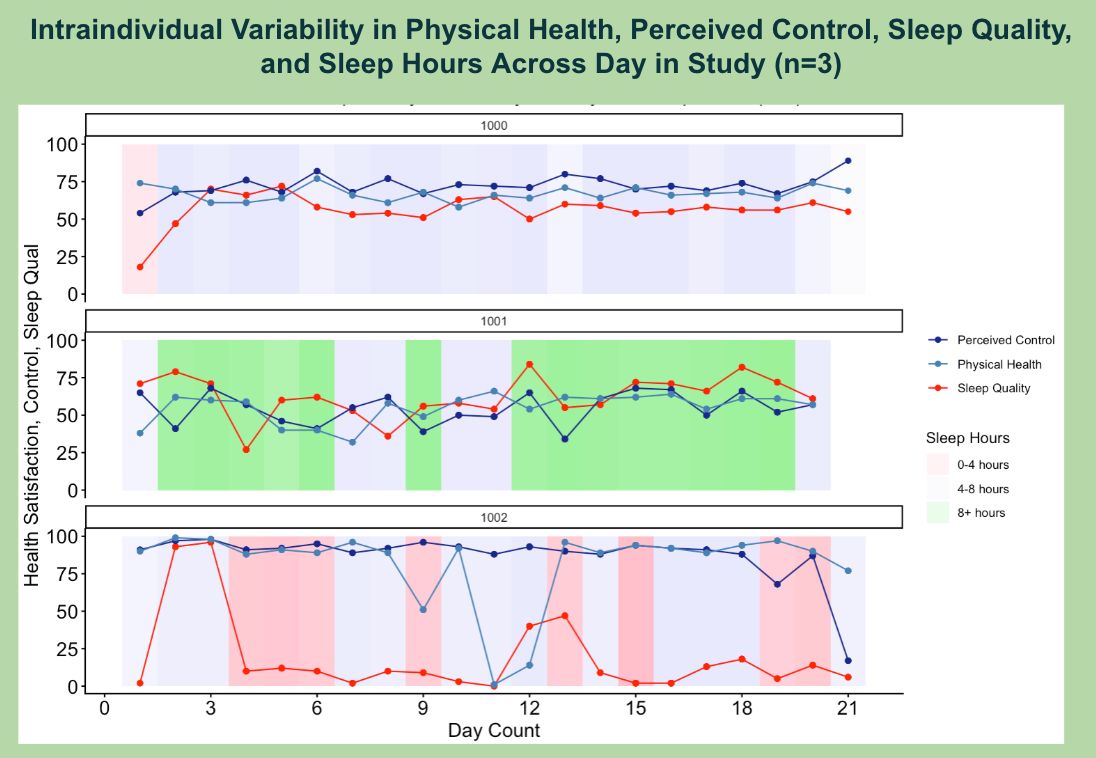
Within-Person Relations among Daily Physical Health, Sleep, and Perceived Control
2026-08-31 4:10 PM
Extending from evidence the changes in physical health may influence individuals’ sleep quality, and that disruptions to daily routines may influence individuals’ perceived control, this project examines the relations, both between-person and within-person, among physical health, sleep quality, and perceived control, and the specific hypothesis that sleep quality is a mechanism through which changes in physical health infiltrate individuals’ perceptions of control.
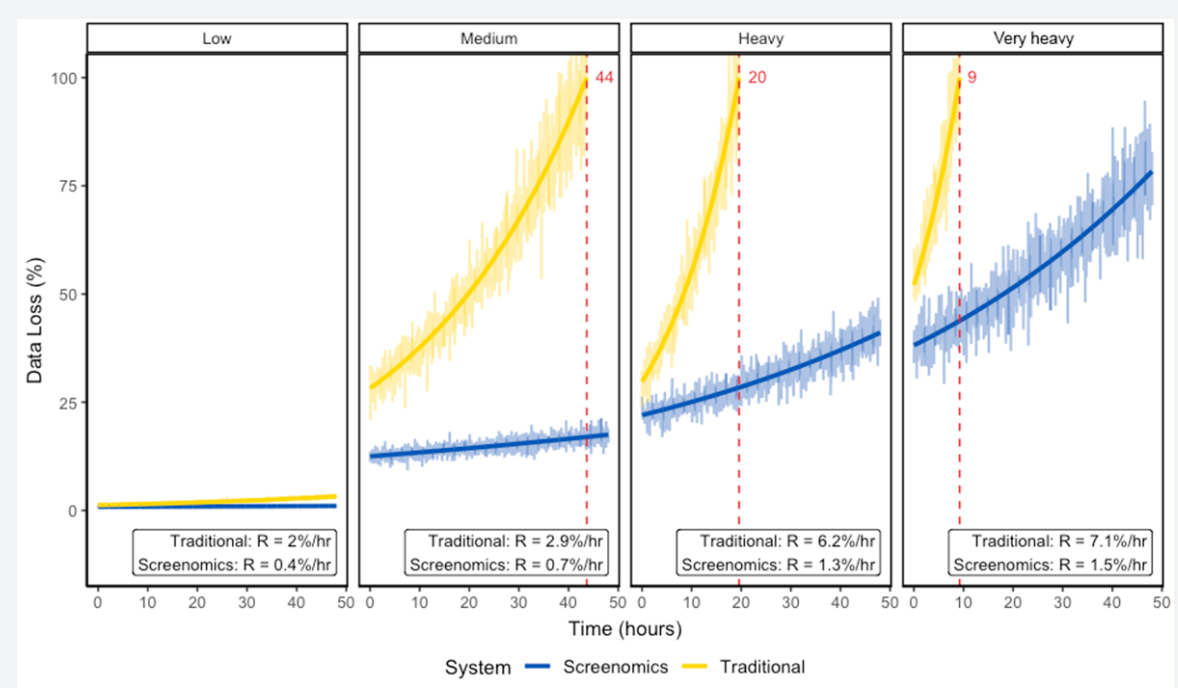
Software Reference Architecture for Real-Time Mobile Digital Phenotyping: Evaluation of System Designs
2026-08-08 3:49 PM
We propose the Stanford Screenomics platform as a software reference architecture that uses a modular design to integrate parallel processing and edge computing, enabling scalable, real-time digital phenotyping on smartphones...
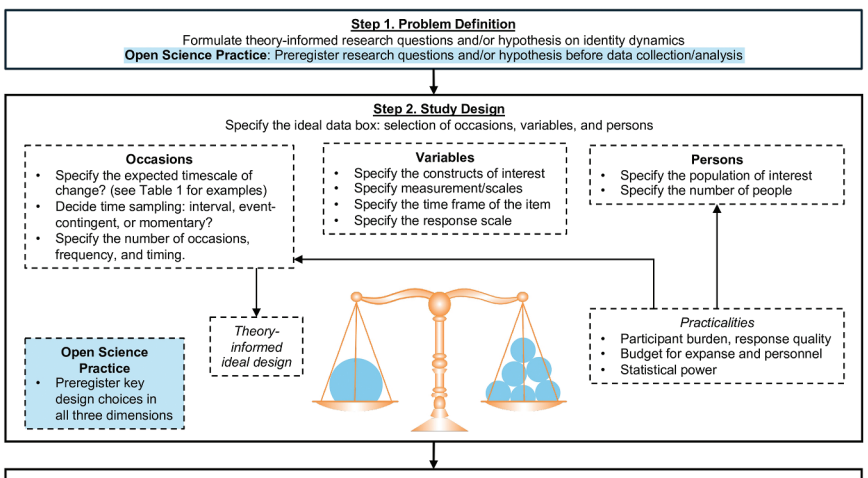
Using Experience Sampling Methods to Study Identity Dynamics: A 5-Step Guide
2026-07-14 11:00 PM
This paper provides a five-step practical guide to ESM—full flow from theoretical specification to study design, data collection, data analysis, and results presentation and interpretation—that may be helpful for identity scholars seeking to integrate ESM in their work. In presenting each step, we outline the core goals and decisions involved and provide an illustrative example, describing how specific design decisions were made in a small empirical study of how ethnic-racial and gender identity change across social situations and how the resulting specifics and empirical results might be reported in a journal manuscript.
Beyond apps: a method to model full distributions of screen content over time to study media effects
2026-07-10 11:55 AM
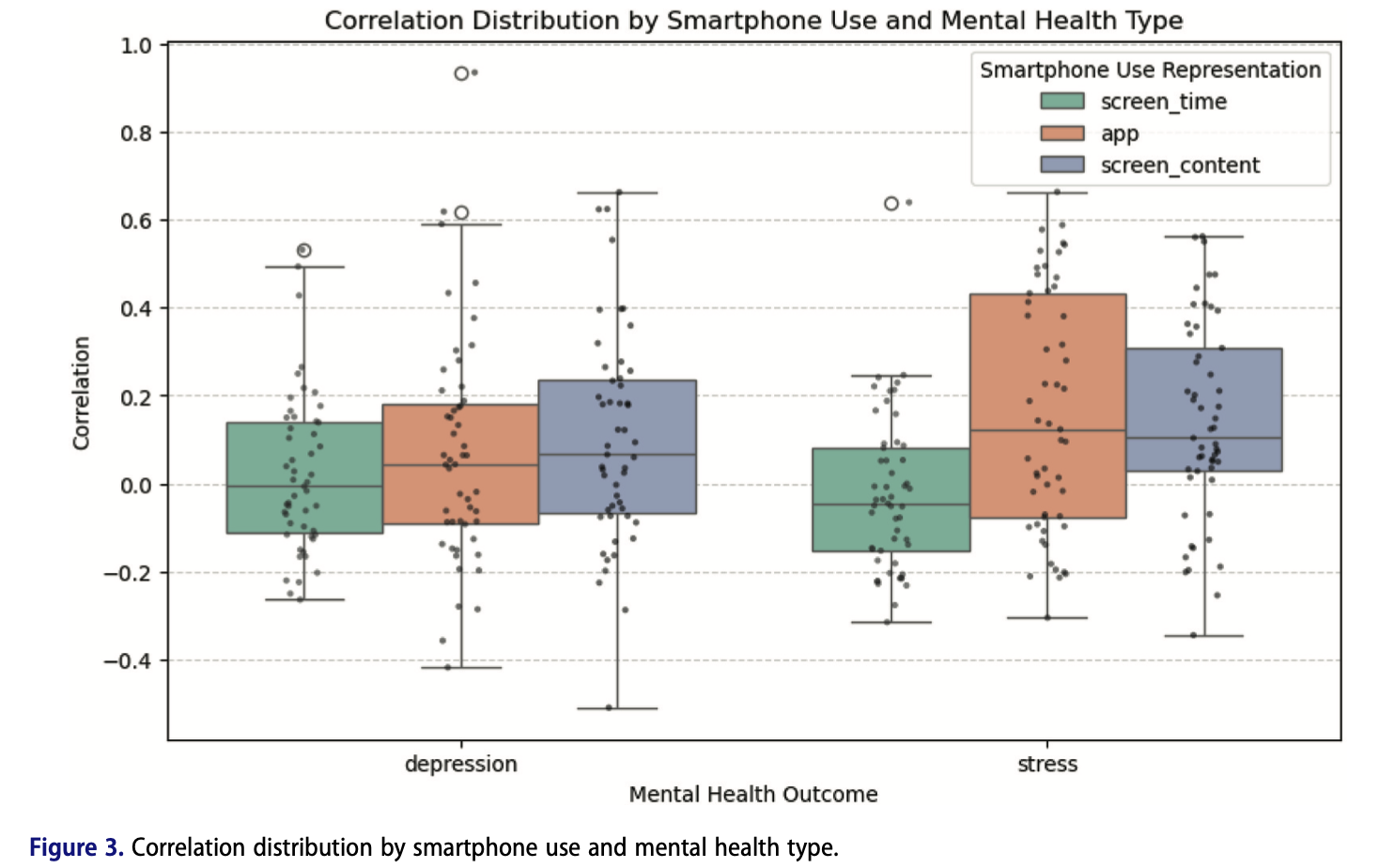
We introduce smartphone screen content patterns (content patterns) as a new construct and propose an analytical framework that represents smartphone use as distributions of experienced screen content rather than summaries of time spent on devices or in apps. We operationalize content patterns using deep learning embeddings of moment-by-moment screenshots and formalize use periods as probability distributions over embedding space...

Engagement, Exposure, Exploitation: Algorithmic Persuasion and Explicit Content
2026-07-01 7:37 PM
In this honors thesis, I leveraged longitudinal survey and screenome data from the Human Screenome Project (HSP) in a mixed methods analysis of user behavior and cognitive-affective states related to viewing and engaging with unmoderated graphic explicit content and qualitative case studies of two participants' screenshot sequences.

Goal-Directed or Algorithmically Captured? Analyzing Attention in the Smartphone Era
2026-07-01 6:57 PM
While researchers are studying the relationship between smartphone and media use and attention, existing studies are limited by reliance on cross-sectional surveys, self-reports, and experimental
designs that fail to capture naturalistic, moment-to-moment behavior or the qualitative nature of digital content. In this paper, I address these gaps using a mixed-methods approach using Screenome data from the Human Screenome Project to study smartphone use and attention...

Wellness Behavior On and Off Screen: Affective Impacts of Engagement with Wellness Behavior and Media
2026-07-01 6:15 PM
Although less is known about the impact of digital behaviors, they could be another accessible avenue for promoting well-being. This study fills this gap in research by leveraging intensive longitudinal survey data collected fortnightly from adults over 52 weeks and passive screenome data collected through screenshots over the course of a year from the Human Screenome Project...
“But Where Are You Really From?” The Cost of Movement: A Longitudinal Analysis of Migrant Life Satisfaction and Health Outcomes in Germany
2026-06-01 4:00 PM
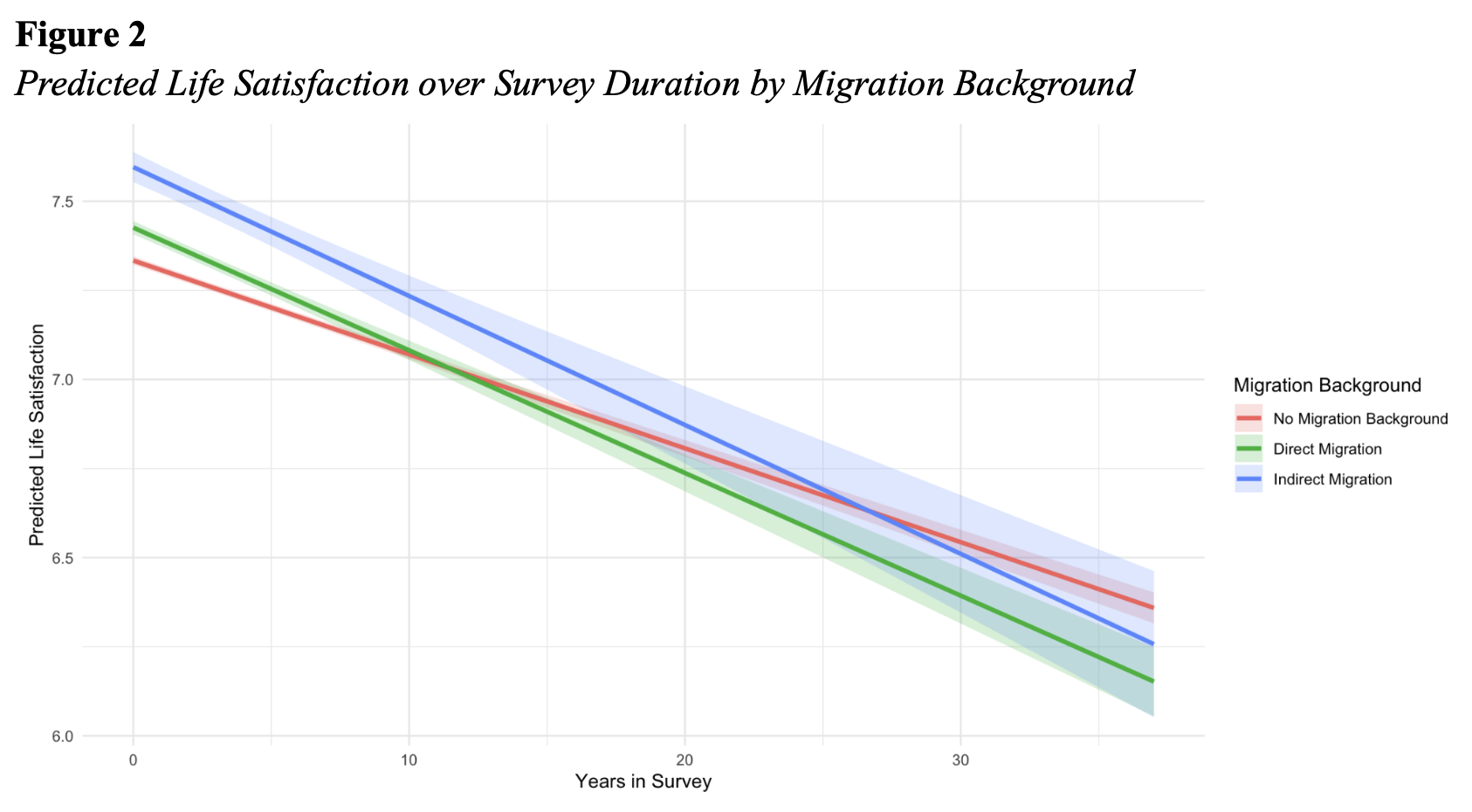
Applying linear growth models to longitudinal data from the German Socio-Economic Panel (SOEP), I examine changes in life satisfaction, health satisfaction, and self-reported health limitations for N = 99,433 participants (Mage = 39 , SD = 17; 50% female) over a 37-year period. The sample includes individuals with no migration background (n = 64,954), direct migration background (n = 29,016), and indirect migration background (n = 5,463).
