

News & Updates
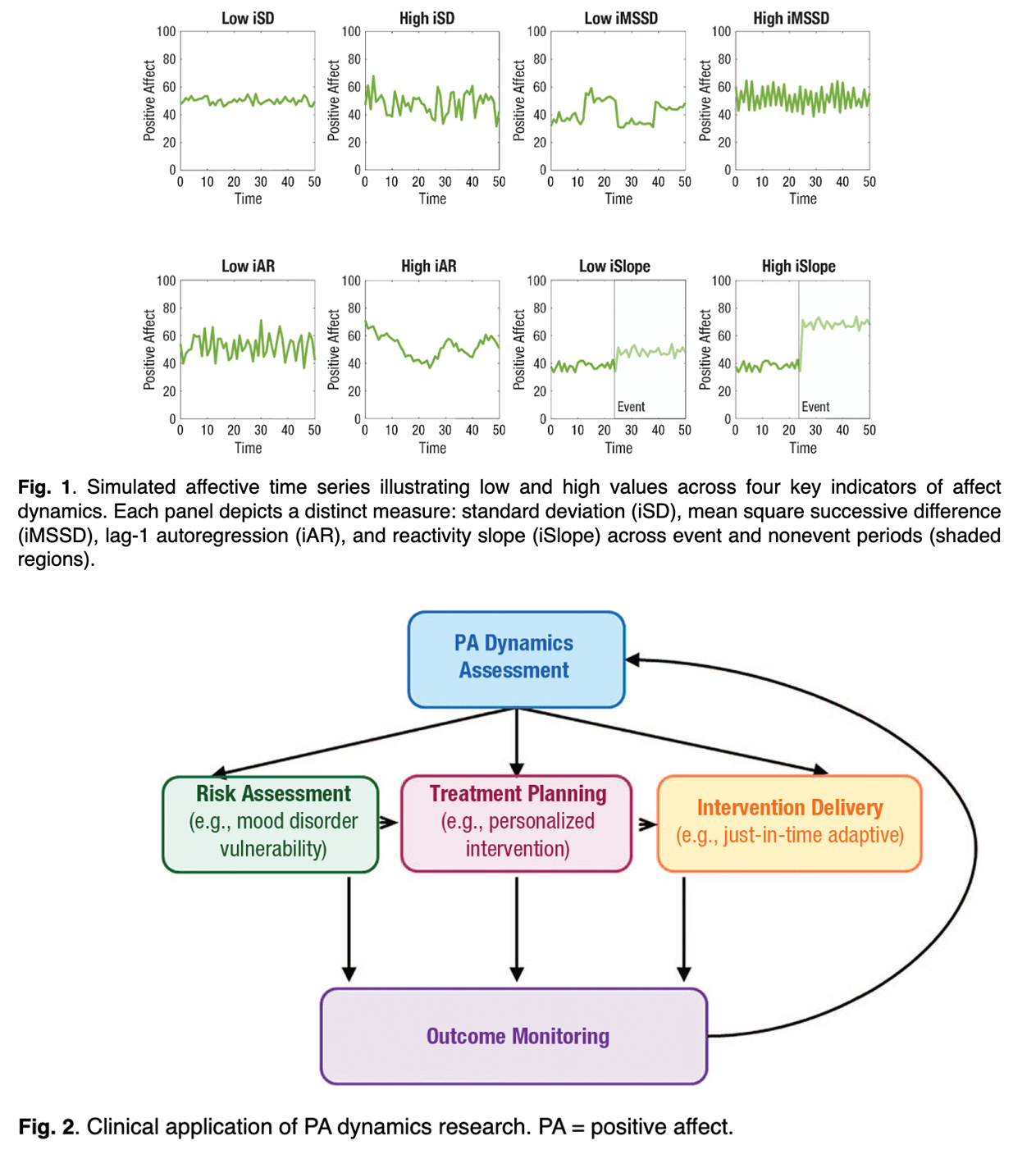
Positive Affect Dynamics
2025-05-20 2:23 PM
Here, we examine how key temporal properties—including variability, instability, inertia, and reactivity—relate to adaptive functioning and health-relevant outcomes. These dynamic approaches extend traditional assessment frameworks, offering greater predictive utility for understanding health trajectories beyond static measures...
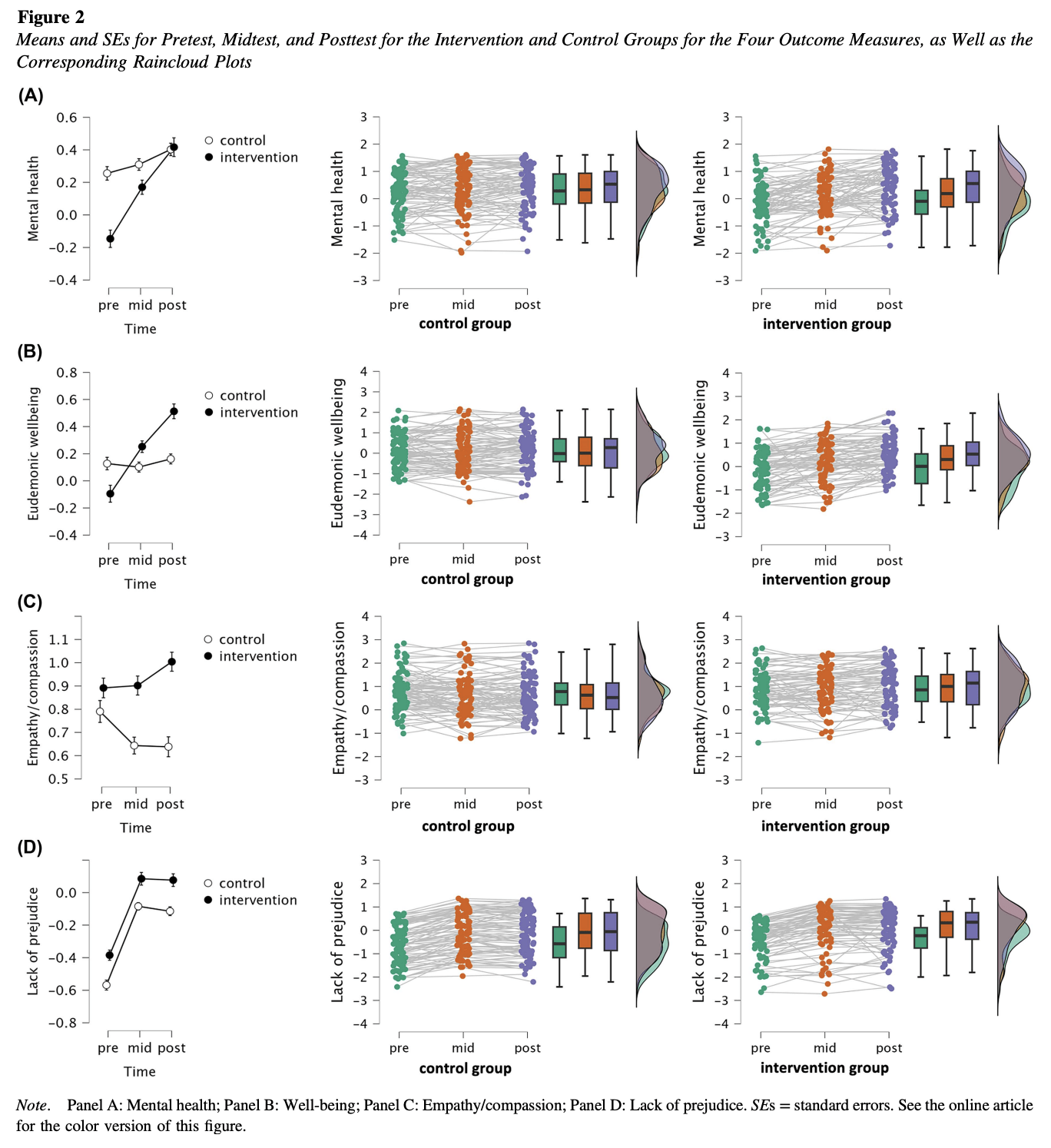
Mindfulness from Me to We: A Randomized Control Trial on the Effects of an 8-week Mindfulness Intervention on Mindfulness, Well-Being, Mental Health, Compassion, and Prosociality
2025-05-20 1:49 PM
We investigated whether effects of an 8-week mindfulness training (Mindfulness Institute for Emerging Adults), known to result in changes in mindfulness, well-being, and mental health, would carry over into changes in compassion and then into changes in prosociality (a cascade
effect)...

Bayesian Response Surface Analysis (BRSA) for Congruence Hypothesis
2025-05-19 11:59 AM
We propose Bayesian Response Surface Analysis (BRSA) for null hypothesis testing using Region of Practical Equivalence (ROPE) and model comparison (out-of-sample predictive accuracy). Further, we propose the use of generalized additive models (GAMs)...
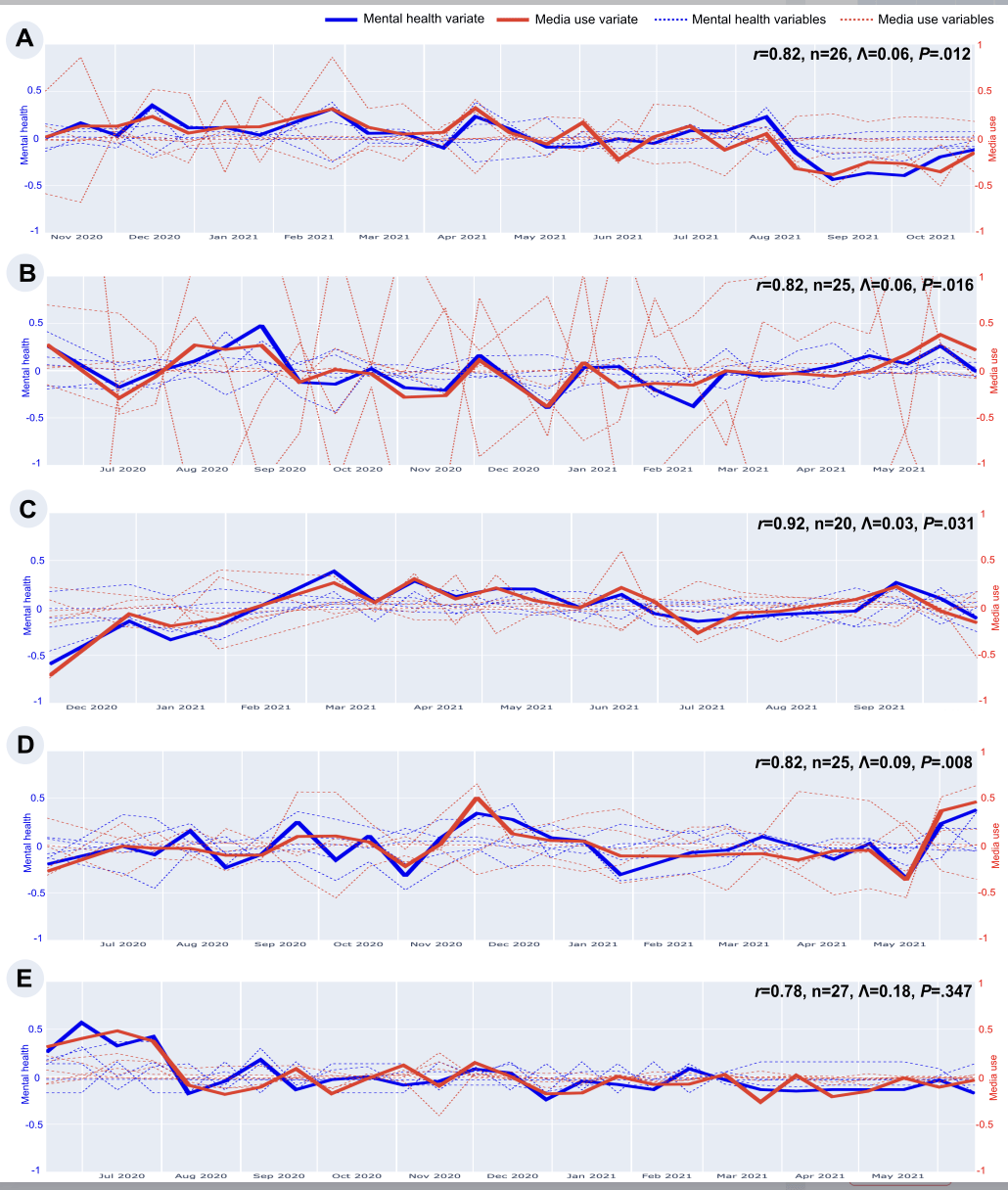
Person-Specific Analyses of Smartphone Use and Mental Health: Intensive Longitudinal Study
2025-03-11 3:24 PM
This exploratory empirical demonstration aims to answer whether mental health effects are associated with media use experiences by...

Variational Inference as Tractable Approximation for Bayesian Models of Psychological Change Processes
2024-11-05 3:22 PM
Large-scale Bayesian modeling of nonlinear psychological change processes can be intractable and unsustainable. Variational inference facilitates Bayesian analysis through estimation of approximate posterior distributions...

Personality Differences Drive Conversational Dynamics: A High-Dimensional NLP Approach
2024-10-30 4:55 PM
This paper investigates how the topical flow of dyadic conversations emerges over time and how differences in interlocutors’ personality traits contribute to this topical flow.

Using State Space Grids to Quantify and Examine Dynamics of Dyadic Conversation
2024-10-25 4:50 PM
This paper illustrates how to implement state space grid analysis for analyzing the back-and-forth multi-turn dynamics that manifest in dyadic conversations. In doing so, we contribute to a dynamic dyadic systems perspective that seeks to advance theories about individual and relational antecedents and outcomes of interpersonal communication through the articulation and study of dyadic interaction dynamics.

“Screenertia” in the Screenome: Investigating Targeted Exposure to Graphic Content in Vulnerable Populations
2024-10-04 2:19 PM
Cognitive-affective distress can increase vulnerability to addictive behavior, often manifesting as addictive sexual or violent behavior, including the consumption of pornography and violence online (Sinha, 2008)...

The Attention Economy and Mental Health: Anxiety as a moderator between ADHD symptoms, phone use, and sleep
2024-08-30 3:33 PM
In 2024, 90% of adults and 95% of teens in the United States report having access to a smartphone (Pew Research Center). Smartphones have been shown to impact attention.

Digital Behavior, Wellness, and Affect: Exploring the effects of wellness practices and digital help-seeking behavior on mental health
2024-08-30 3:19 PM
Rising mental health concerns in the U.S. (Wilson, 2022) underscore the need to identify influencing factors. Poverty profoundly affects well-being (Marbin 2022), highlighting the importance of considering the impact of socioeconomic factors such as income on mental health. Some studies suggest a strong negative correlation between excessive cell phone use and mental health, (Daniyal, 2022) however findings are mixed (Brinberg 2021).
