Warning : Undefined variable $post in
/home/quantdev/thechangelab.stanford.edu/wp-content/themes/lagunita-theme/Lagunita.php on line
124
Warning : Attempt to read property "ID" on null in
/home/quantdev/thechangelab.stanford.edu/wp-content/themes/lagunita-theme/Lagunita.php on line
124
Storms in the Screenome: An Analysis of Digital Information Acquisition During Extreme Weather Events
Department of Symbolic Systems Honors Thesis
The intensity and frequency of extreme weather events is increasing. As the amount of time people are spending on their smartphones also increases, the “Weather Information Landscape” is shifting away from “traditional” communication sources like radio and television toward digital media, including social media and smartphone-enabled weather communication (Krocak et al., 2024). However, the content people see – and the sources of that content – in this new landscape are not yet well accessible or understood.
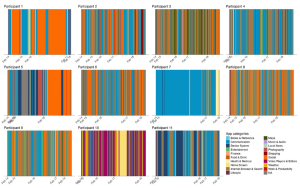
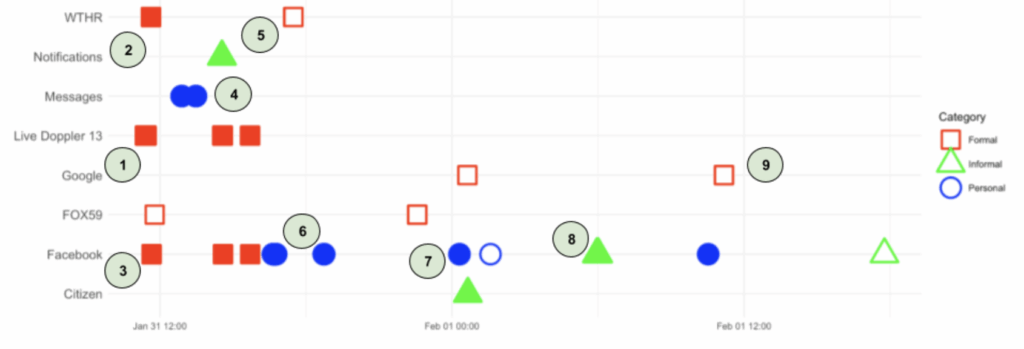
Through detailed observation of individuals’ smartphone behavior, we investigate 1) where people source extreme weather information, 2) the sequence of how people acquire information, and 3) whether individuals are passively or actively acquiring information. Specifically, we leverage data collected by the Human Screenome Project (HSP) – millions of smartphone screenshots obtained every five seconds from 264 people in the United States between 2020 and 2021 (Reeves et al., 2020). After merging this dataset with NOAA’s Storm Events Database, we identified 10 participants that had experienced one or more of 12 high-casualty/damage weather events while participating in the HSP. Using qualitative coding of screenshots and phone-use metadata, such as time spent on specific apps or activities, we identified weather information encountered before, during, and after the weather events.
Our findings support three key hypotheses: (1) non-expert weather sources are increasingly disseminating information via social media, (2) information-seeking behavior tends to occur in concentrated bursts, and (3) individuals often encounter weather risk information passively, scrolling past it while doing other activities. Overall, our analysis provides a detailed, holistic, and insider view into how people consume and act on risk communication during extreme weather events – from reacting to weather warnings to sharing disaster information and communicating with family and friends.
Thesis PDF Flipbook
Citation
5122592
{5122592:N8QLLF7E}
1
apa
50
default
5152
https://thechangelab.stanford.edu/wp-content/plugins/zotpress/
%7B%22status%22%3A%22success%22%2C%22updateneeded%22%3Afalse%2C%22instance%22%3Afalse%2C%22meta%22%3A%7B%22request_last%22%3A0%2C%22request_next%22%3A0%2C%22used_cache%22%3Atrue%7D%2C%22data%22%3A%5B%7B%22key%22%3A%22N8QLLF7E%22%2C%22library%22%3A%7B%22id%22%3A5122592%7D%2C%22meta%22%3A%7B%22lastModifiedByUser%22%3A%7B%22id%22%3A12056293%2C%22username%22%3A%22davidbarnstone%22%2C%22name%22%3A%22%22%2C%22links%22%3A%7B%22alternate%22%3A%7B%22href%22%3A%22https%3A%5C%2F%5C%2Fwww.zotero.org%5C%2Fdavidbarnstone%22%2C%22type%22%3A%22text%5C%2Fhtml%22%7D%7D%7D%2C%22creatorSummary%22%3A%22Shi%22%2C%22parsedDate%22%3A%222025-06-16%22%2C%22numChildren%22%3A0%7D%2C%22bib%22%3A%22%26lt%3Bdiv%20class%3D%26quot%3Bcsl-bib-body%26quot%3B%20style%3D%26quot%3Bline-height%3A%202%3B%20padding-left%3A%201em%3B%20text-indent%3A-1em%3B%26quot%3B%26gt%3B%5Cn%20%20%26lt%3Bdiv%20class%3D%26quot%3Bcsl-entry%26quot%3B%26gt%3BShi%2C%20C.%20%282025%29.%20%26lt%3Bi%26gt%3BStorms%20in%20the%20Screenome%3A%20An%20Analysis%20of%20Digital%20Information%20Acquisition%20During%20Extreme%20Weather%20Events%26lt%3B%5C%2Fi%26gt%3B%20%5BHonors%20Thesis%2C%20Stanford%20University%5D.%20%26lt%3Ba%20class%3D%26%23039%3Bzp-ItemURL%26%23039%3B%20href%3D%26%23039%3Bhttps%3A%5C%2F%5C%2Fthechangelab.stanford.edu%5C%2Fwp-content%5C%2Fuploads%5C%2F2025%5C%2F06%5C%2FCharles_Shi_Final_Honors.pdf%26%23039%3B%26gt%3Bhttps%3A%5C%2F%5C%2Fthechangelab.stanford.edu%5C%2Fwp-content%5C%2Fuploads%5C%2F2025%5C%2F06%5C%2FCharles_Shi_Final_Honors.pdf%26lt%3B%5C%2Fa%26gt%3B%26lt%3B%5C%2Fdiv%26gt%3B%5Cn%26lt%3B%5C%2Fdiv%26gt%3B%22%2C%22data%22%3A%7B%22itemType%22%3A%22thesis%22%2C%22title%22%3A%22Storms%20in%20the%20Screenome%3A%20An%20Analysis%20of%20Digital%20Information%20Acquisition%20During%20Extreme%20Weather%20Events%22%2C%22creators%22%3A%5B%7B%22creatorType%22%3A%22author%22%2C%22firstName%22%3A%22Charles%22%2C%22lastName%22%3A%22Shi%22%7D%5D%2C%22abstractNote%22%3A%22The%20intensity%20and%20frequency%20of%20extreme%20weather%20events%20is%20increasing.%20As%20the%20amount%20of%20time%20people%20are%20spending%20on%20their%20smartphones%20also%20increases%2C%20the%20%5Cu201cWeather%20Information%20Landscape%5Cu201d%20is%20shifting%20away%20from%20%5Cu201ctraditional%5Cu201d%20communication%20sources%20like%20radio%20and%20television%20toward%20digital%20media%2C%20including%20social%20media%20and%20smartphone-enabled%20weather%20communication%20%28Krocak%20et%20al.%2C%202024%29.%20However%2C%20the%20content%20people%20see%20%5Cu2013%20and%20the%20sources%20of%20that%20content%20%5Cu2013%20in%20this%20new%20landscape%20are%20not%20yet%20well%20accessible%20or%20understood.%5Cn%5CnThrough%20detailed%20observation%20of%20individuals%5Cu2019%20smartphone%20behavior%2C%20we%20investigate%201%29%20where%20people%20source%20extreme%20weather%20information%2C%202%29%20the%20sequence%20of%20how%20people%20acquire%20information%2C%20and%203%29%20whether%20individuals%20are%20passively%20or%20actively%20acquiring%20information.%20Specifically%2C%20we%20leverage%20data%20collected%20by%20the%20Human%20Screenome%20Project%20%28HSP%29%20%5Cu2013%20millions%20of%20smartphone%20screenshots%20obtained%20every%20five%20seconds%20from%20264%20people%20in%20the%20United%20States%20between%202020%20and%202021%20%28Reeves%20et%20al.%2C%202020%29.%20After%20merging%20this%20dataset%20with%20NOAA%5Cu2019s%20Storm%20Events%20Database%2C%20we%20identified%2010%20participants%20that%20had%20experienced%20one%20or%20more%20of%2012%20high-casualty%5C%2Fdamage%20weather%20events%20while%20participating%20in%20the%20HSP.%20Using%20qualitative%20coding%20of%20screenshots%20and%20phone-use%20metadata%2C%20such%20as%20time%20spent%20on%20specific%20apps%20or%20activities%2C%20we%20identified%20weather%20information%20encountered%20before%2C%20during%2C%20and%20after%20the%20weather%20events.%5Cn%5CnOur%20findings%20support%20three%20key%20hypotheses%3A%20%281%29%20non-expert%20weather%20sources%20are%20increasingly%20disseminating%20information%20via%20social%20media%2C%20%282%29%20information-seeking%20behavior%20tends%20to%20occur%20in%20concentrated%20bursts%2C%20and%20%283%29%20individuals%20often%20encounter%20weather%20risk%20information%20passively%2C%20scrolling%20past%20it%20while%20doing%20other%20activities.%20Overall%2C%20our%20analysis%20provides%20a%20detailed%2C%20holistic%2C%20and%20insider%20view%20into%20how%20people%20consume%20and%20act%20on%20risk%20communication%20during%20extreme%20weather%20events%20%5Cu2013%20from%20reacting%20to%20weather%20warnings%20to%20sharing%20disaster%20information%20and%20communicating%20with%20family%20and%20friends.%22%2C%22thesisType%22%3A%22Honors%20Thesis%22%2C%22university%22%3A%22Stanford%20University%22%2C%22date%22%3A%22June%2016%2C%202025%22%2C%22DOI%22%3A%22%22%2C%22ISBN%22%3A%22%22%2C%22citationKey%22%3A%22shiStormsScreenomeAnalysis2025a%22%2C%22url%22%3A%22https%3A%5C%2F%5C%2Fthechangelab.stanford.edu%5C%2Fwp-content%5C%2Fuploads%5C%2F2025%5C%2F06%5C%2FCharles_Shi_Final_Honors.pdf%22%2C%22ISSN%22%3A%22%22%2C%22language%22%3A%22en%22%2C%22collections%22%3A%5B%222SJC6NKD%22%5D%2C%22dateModified%22%3A%222026-02-16T15%3A54%3A20Z%22%7D%7D%5D%7D
Shi, C. (2025).
Storms in the Screenome: An Analysis of Digital Information Acquisition During Extreme Weather Events [Honors Thesis, Stanford University].
https://thechangelab.stanford.edu/wp-content/uploads/2025/06/Charles_Shi_Final_Honors.pdf
Prior News & Updates
Post navigation


![Honors Posters at Symposium of Undergraduate Research and Public Service [April 25, 2026]](https://thechangelab.stanford.edu/wp-content/uploads/2026/04/Garg_SURPSVig_20260425-300x95.png "Honors Posters at Symposium of Undergraduate Research and Public Service [April 25, 2026]")