

Category: Publication
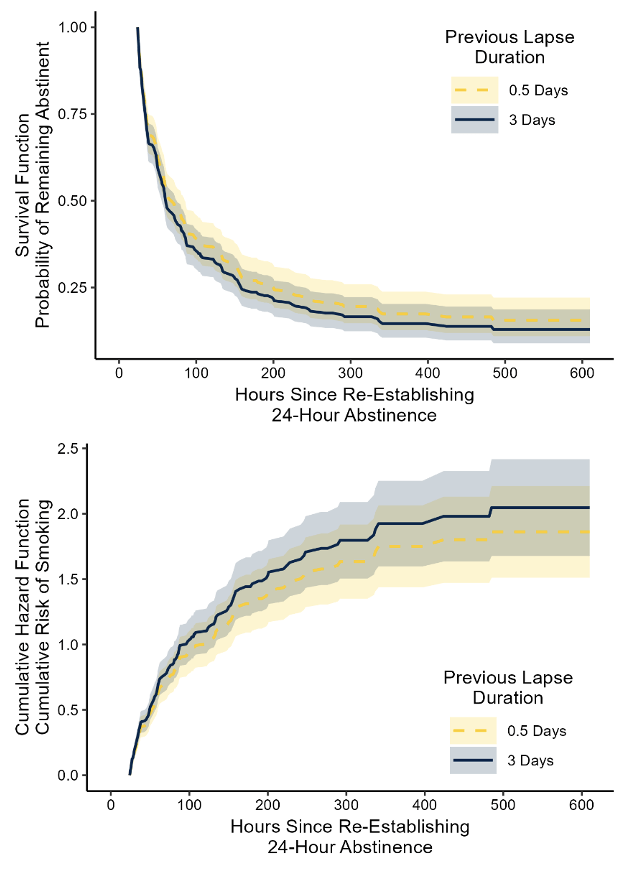
Time-Related Considerations for Modeling Event-Based Data Collected via Ecological Momentary Assessment
2025-10-27 6:33 PM
This article provides an overview of survival analysis, describes several time-based considerations for modeling event-based EMA data using survival analysis, and provides several illustrative examples of the different time-based considerations...
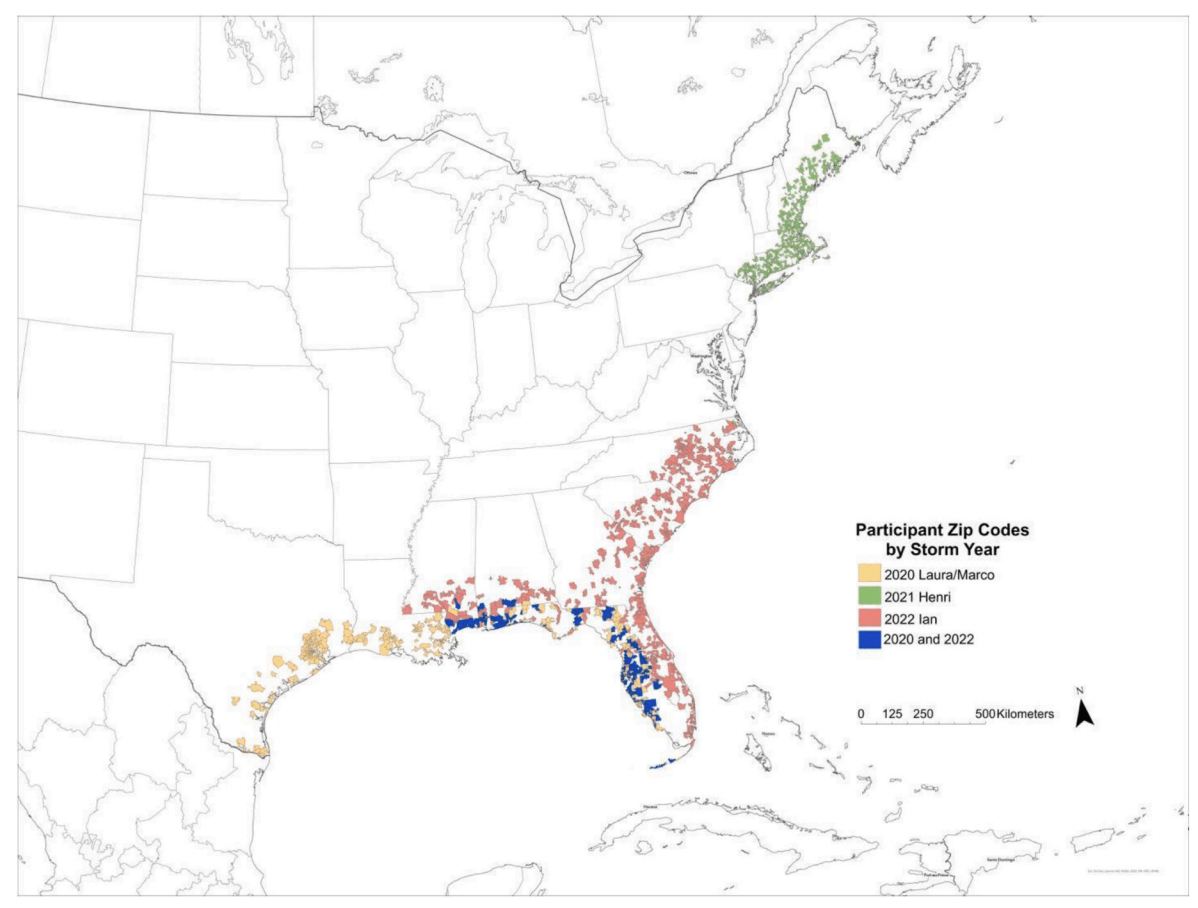
How self-efficacy and response efficacy change with risk and adaptation behaviors during tropical cyclones
2025-10-16 11:51 AM
From our analysis of three (2020–2022) tropical cyclones in the U.S. that threatened 4,306 participants, we demonstrate that (1) time moderates the positive association between momentary levels of personal risk and response efficacy and (2) adaptation behaviors positively associate with momentary levels of response efficacy, but not self-efficacy...
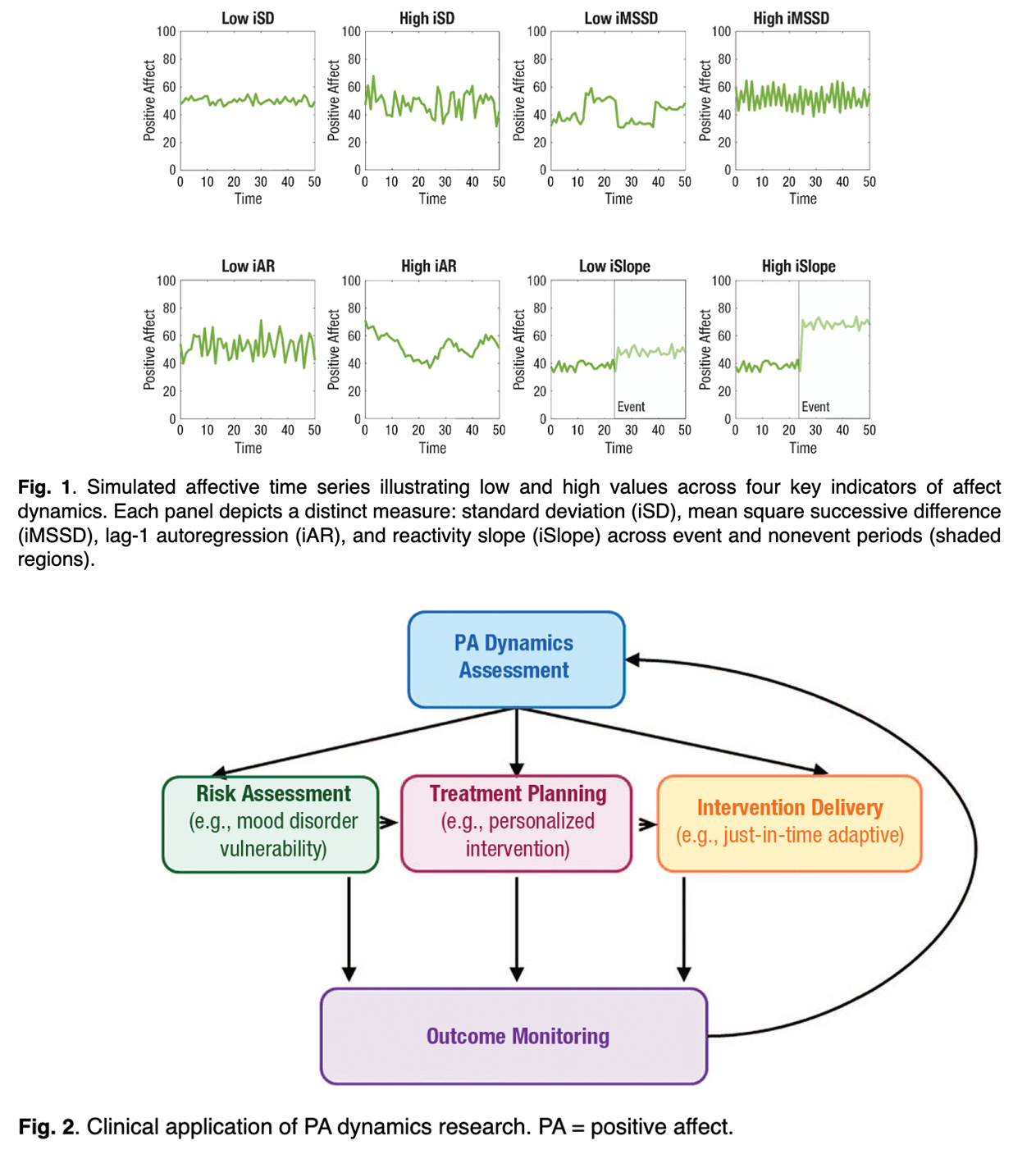
Positive Affect Dynamics
2025-05-20 2:23 PM
Here, we examine how key temporal properties—including variability, instability, inertia, and reactivity—relate to adaptive functioning and health-relevant outcomes. These dynamic approaches extend traditional assessment frameworks, offering greater predictive utility for understanding health trajectories beyond static measures...
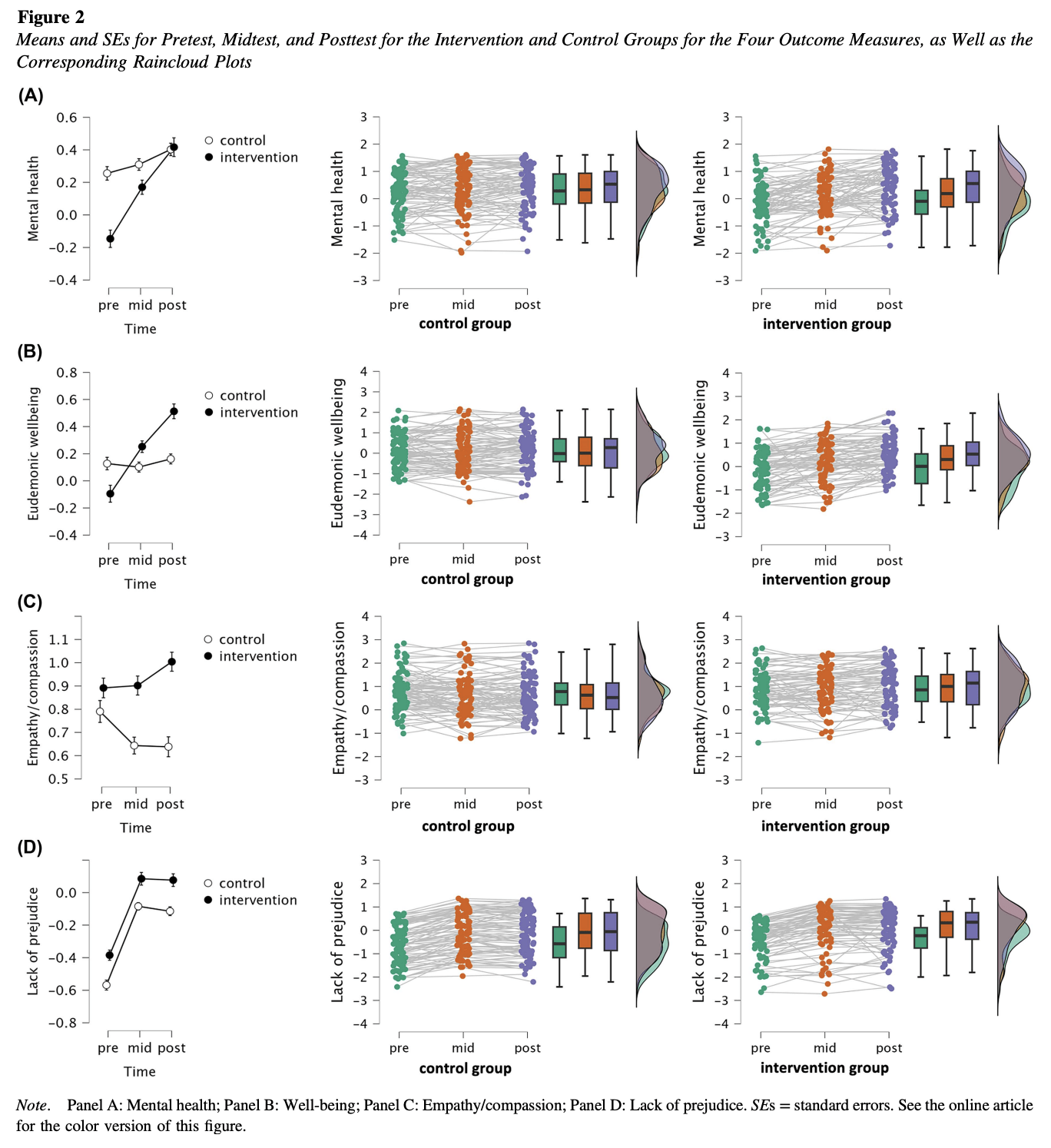
Mindfulness from Me to We: A Randomized Control Trial on the Effects of an 8-week Mindfulness Intervention on Mindfulness, Well-Being, Mental Health, Compassion, and Prosociality
2025-05-20 1:49 PM
We investigated whether effects of an 8-week mindfulness training (Mindfulness Institute for Emerging Adults), known to result in changes in mindfulness, well-being, and mental health, would carry over into changes in compassion and then into changes in prosociality (a cascade
effect)...
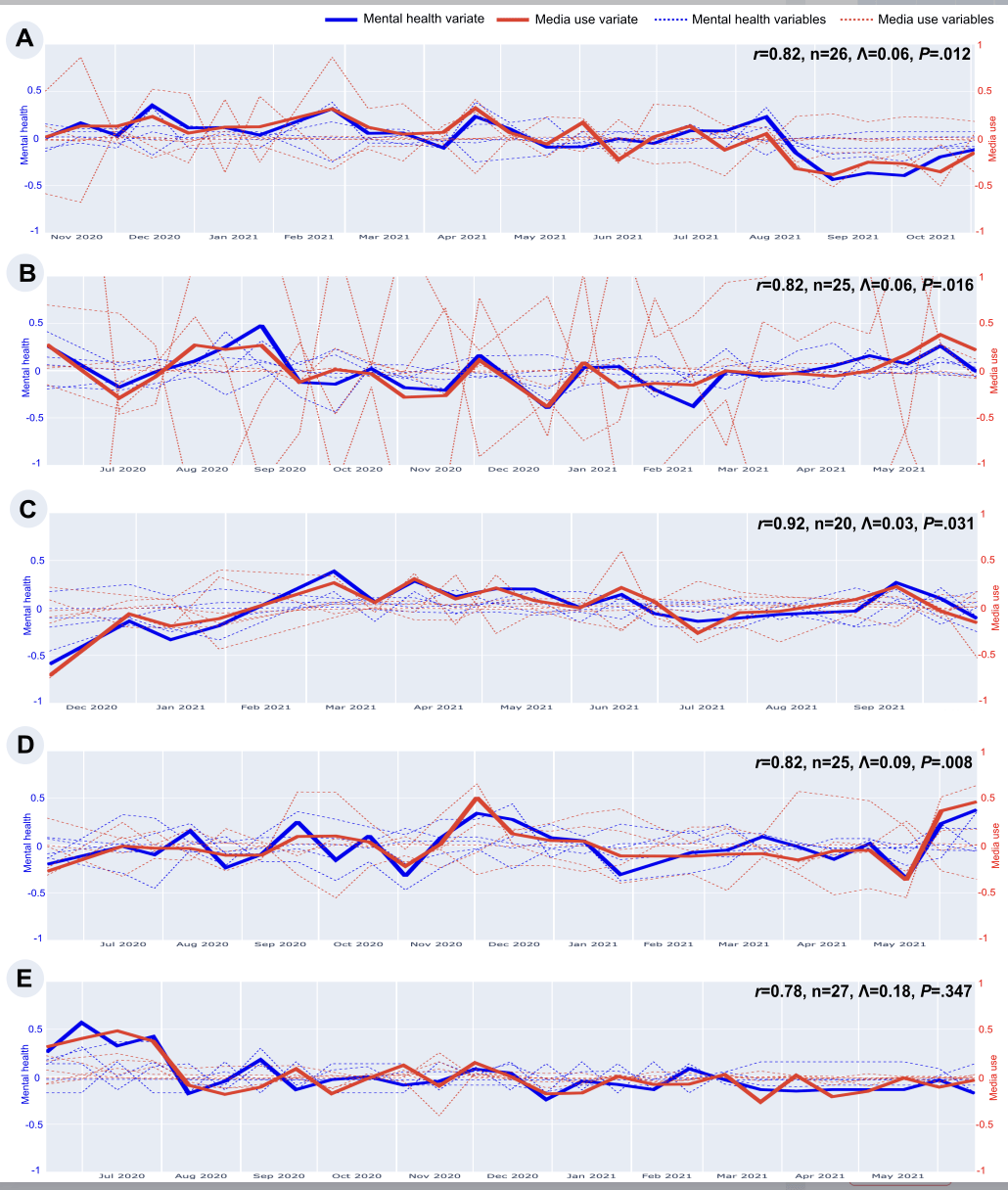
Person-Specific Analyses of Smartphone Use and Mental Health: Intensive Longitudinal Study
2025-03-11 3:24 PM
This exploratory empirical demonstration aims to answer whether mental health effects are associated with media use experiences by...

Personality Differences Drive Conversational Dynamics: A High-Dimensional NLP Approach
2024-10-30 4:55 PM
This paper investigates how the topical flow of dyadic conversations emerges over time and how differences in interlocutors’ personality traits contribute to this topical flow.

Using State Space Grids to Quantify and Examine Dynamics of Dyadic Conversation
2024-10-25 4:50 PM
This paper illustrates how to implement state space grid analysis for analyzing the back-and-forth multi-turn dynamics that manifest in dyadic conversations. In doing so, we contribute to a dynamic dyadic systems perspective that seeks to advance theories about individual and relational antecedents and outcomes of interpersonal communication through the articulation and study of dyadic interaction dynamics.
Affective Sensitivity to Air Pollution (ASAP): Person-specific associations between daily air pollution and affective states
2024-08-12 6:22 PM
Individuals’ sensitivity to climate hazards is a central component of their vulnerability to climate change. In this paper, we introduce and outline the utility of a new intraindividual variability construct, affective sensitivity to air pollution (ASAP)...

Modeling and managing behavior change in groups: A Boolean network method
2024-04-03 11:22 AM
Social influence processes can induce desired or undesired behavior change in individual members of a group. Empirical modeling of group processes and the design of network-based interventions meant to promote desired behavior change is somewhat limited...

Climate Impacts of Digital Use Supply Chains
2024-04-01 8:45 PM
Information and communications technology (ICT) has become an indispensable part of our lives. Prior research on climate impact of ICT devices and services mostly makes use of life cycle assessment and energy modeling frameworks focused on embodied greenhouse gas (GHG) emissions.
