

Tag: Poster
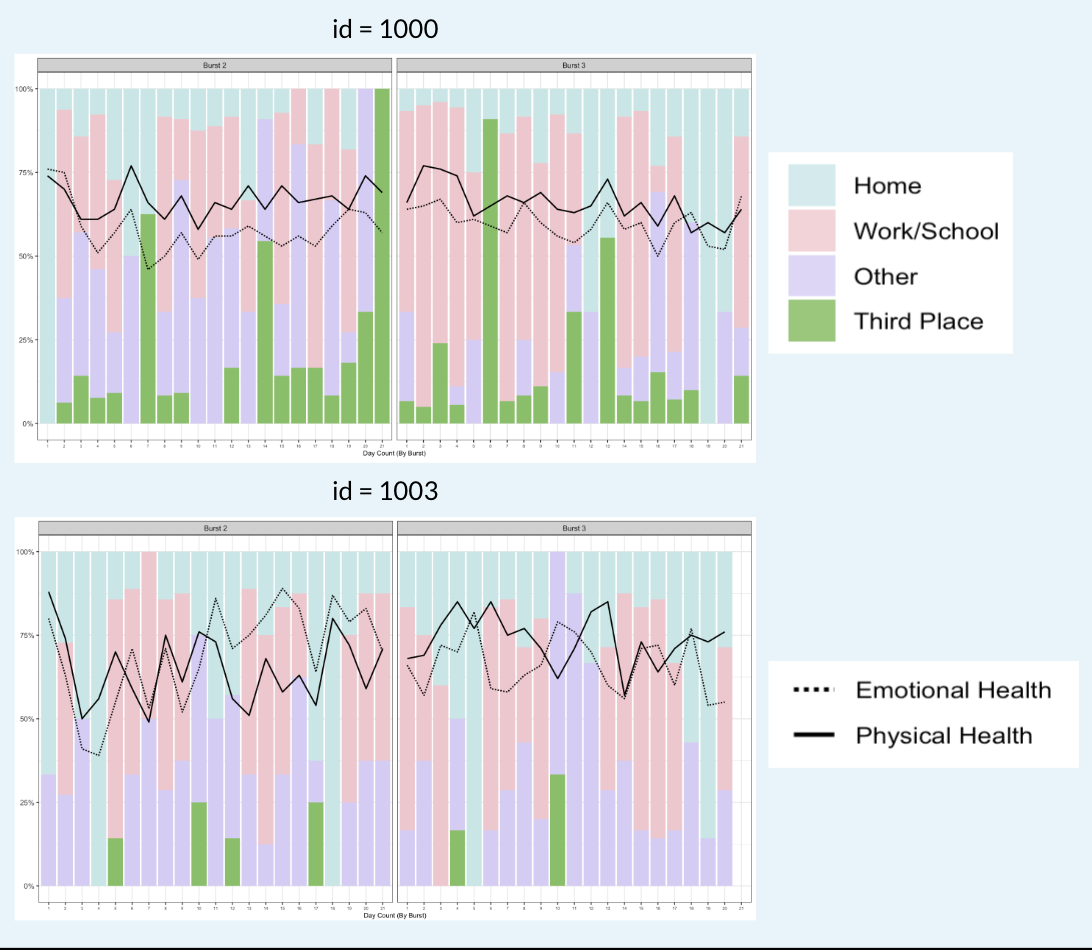
The Geography of Health: Exploring How Engagement With Third Places Shapes Perceived Physical And Emotional Health
2026-09-28 6:13 PM
Studies examining quality of life have shown that environmental factors and qualities, including third places, are significant determinants of physical and emotional health (Zhao and Chung, 2017). Understanding the health implications of third places requires moving beyond accessibility of these places to considering how individuals actively engage with and use third places in their daily lives...
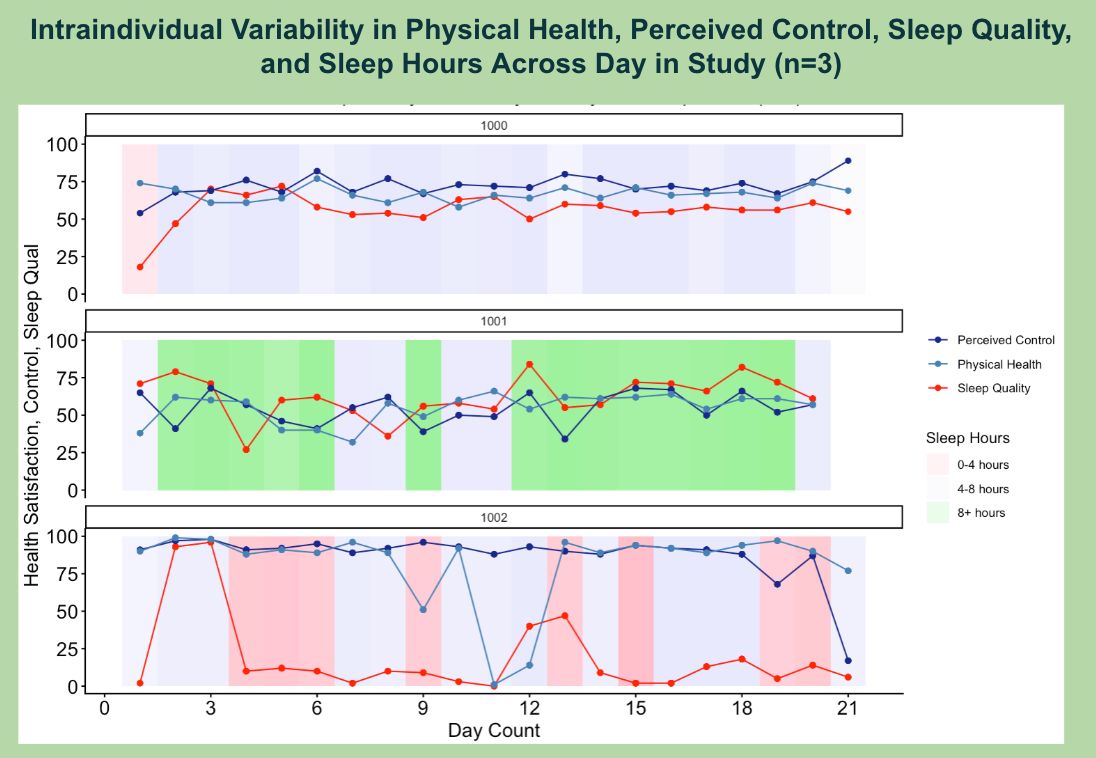
Within-Person Relations among Daily Physical Health, Sleep, and Perceived Control
2026-08-31 4:10 PM
Extending from evidence the changes in physical health may influence individuals’ sleep quality, and that disruptions to daily routines may influence individuals’ perceived control, this project examines the relations, both between-person and within-person, among physical health, sleep quality, and perceived control, and the specific hypothesis that sleep quality is a mechanism through which changes in physical health infiltrate individuals’ perceptions of control.
![Honors Posters at Symposium of Undergraduate Research and Public Service [April 25, 2026]](https://thechangelab.stanford.edu/wp-content/uploads/2026/04/Garg_SURPSVig_20260425.png "Honors Posters at Symposium of Undergraduate Research and Public Service [April 25, 2026]")
Honors Posters at Symposium of Undergraduate Research and Public Service [April 25, 2026]
2026-04-27 5:20 PM
Destiny Tran Saucedo-Martinez and Manasi Garg presented their respective honors theses "Engagement, Exploitation, Exposure: Algorithmic Persuasion and Explicit Content in the Screenome" and "Addiction or Agency? Examining Attention in the Smartphone Age"
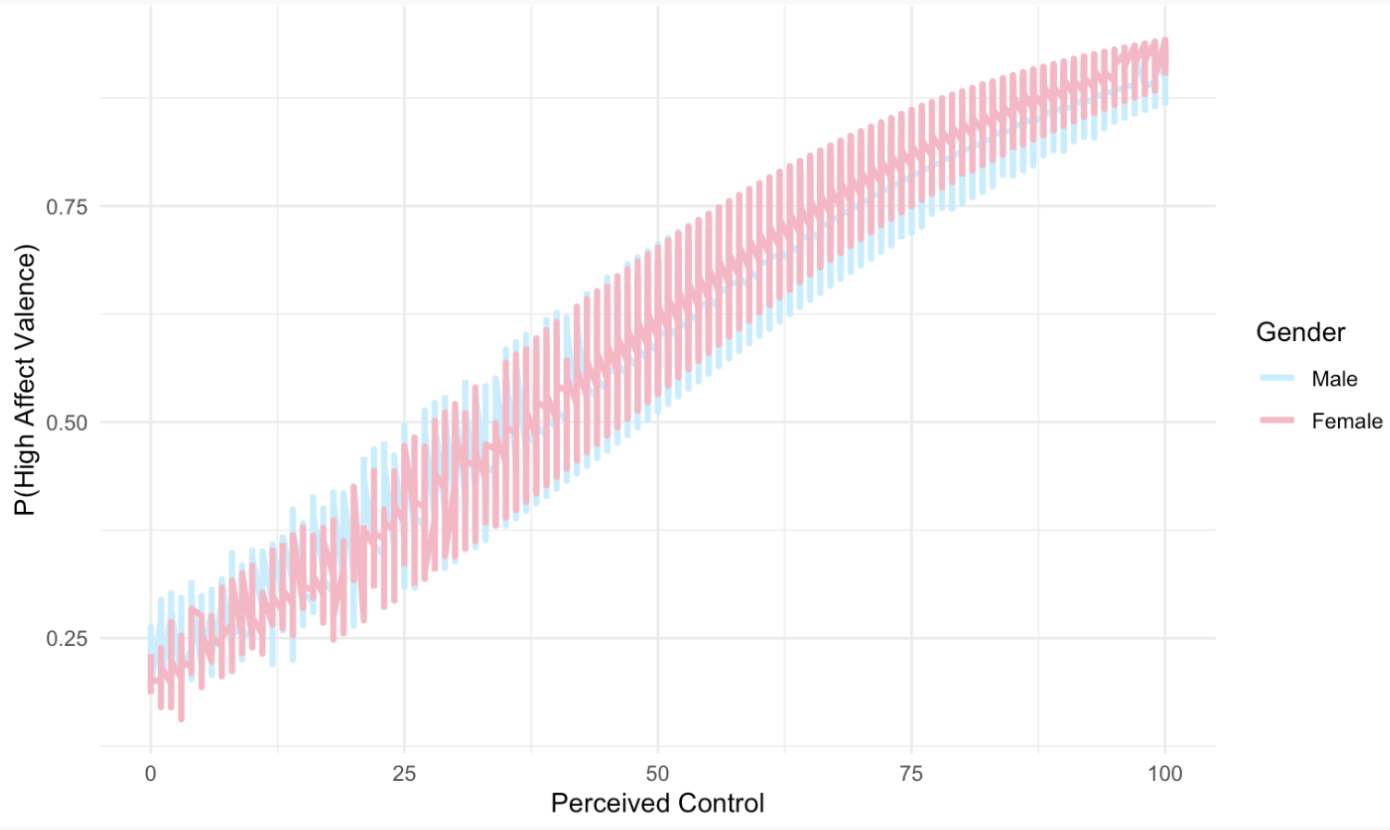
Predicting Daily Affect Valence: The Role of Perceived Control and Personality Traits
2025-10-08 3:09 PM
In daily life, social interactions vary in how emotionally and cognitively engaging people feel, and these situational qualities may amplify or reduce the influence of personality and control in the moment. In this study, I draw on intensive longitudinal data from the iSAHIB...
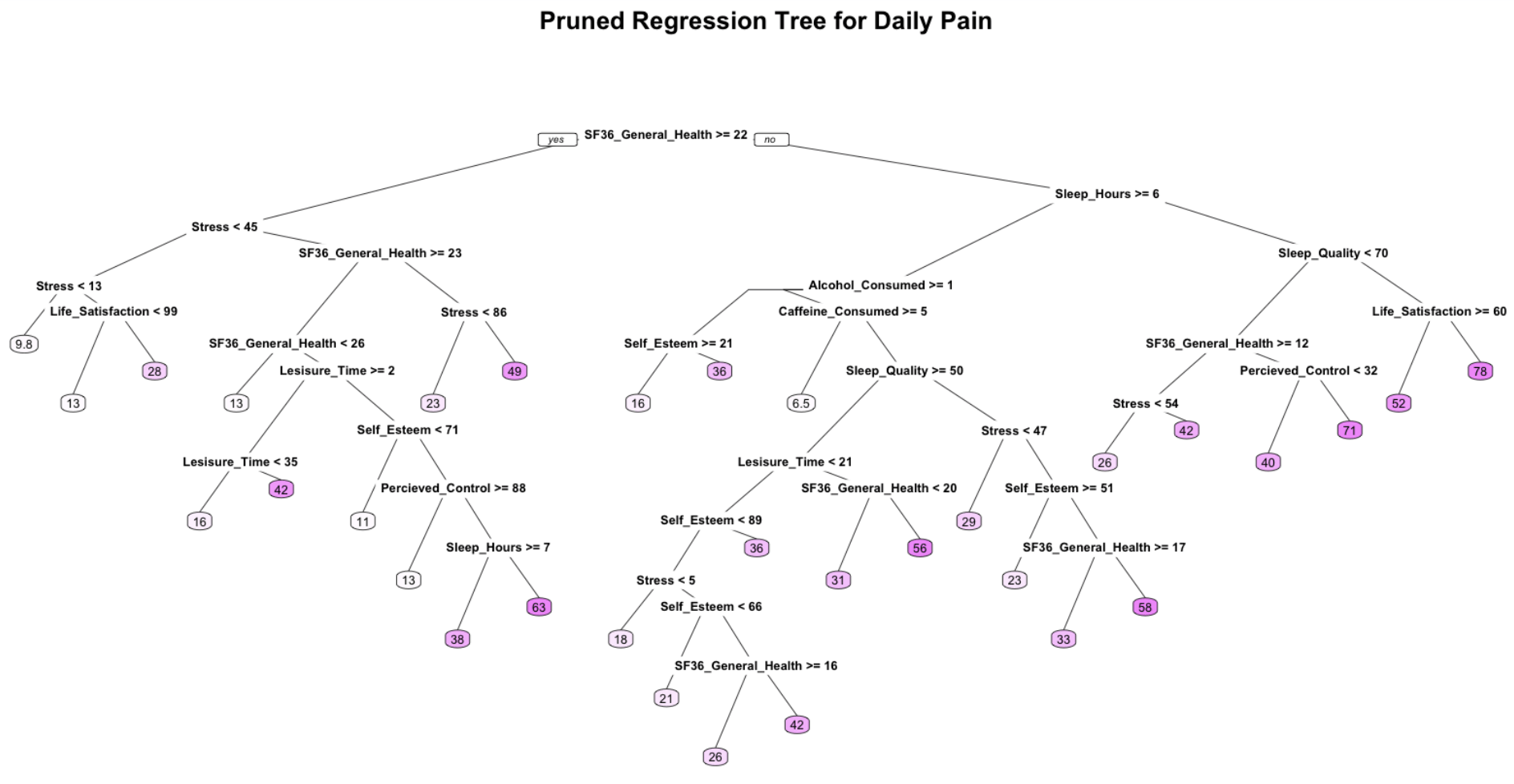
The Psychology of Pain: Exploring the Effects of General Health as a Moderator Between Daily Perceived Control and Pain
2025-09-24 1:44 PM
Pain is a complex experience that varies widely between people and within individuals over time. People with poorer health, especially individuals with multiple comorbidities, generally experience more pain than those with better health...

Bayesian Response Surface Analysis (BRSA) for Congruence Hypothesis
2025-05-19 11:59 AM
We propose Bayesian Response Surface Analysis (BRSA) for null hypothesis testing using Region of Practical Equivalence (ROPE) and model comparison (out-of-sample predictive accuracy). Further, we propose the use of generalized additive models (GAMs)...

Variational Inference as Tractable Approximation for Bayesian Models of Psychological Change Processes
2024-11-05 3:22 PM
Large-scale Bayesian modeling of nonlinear psychological change processes can be intractable and unsustainable. Variational inference facilitates Bayesian analysis through estimation of approximate posterior distributions...

“Screenertia” in the Screenome: Investigating Targeted Exposure to Graphic Content in Vulnerable Populations
2024-10-04 2:19 PM
Cognitive-affective distress can increase vulnerability to addictive behavior, often manifesting as addictive sexual or violent behavior, including the consumption of pornography and violence online (Sinha, 2008)...

The Attention Economy and Mental Health: Anxiety as a moderator between ADHD symptoms, phone use, and sleep
2024-08-30 3:33 PM
In 2024, 90% of adults and 95% of teens in the United States report having access to a smartphone (Pew Research Center). Smartphones have been shown to impact attention.

Digital Behavior, Wellness, and Affect: Exploring the effects of wellness practices and digital help-seeking behavior on mental health
2024-08-30 3:19 PM
Rising mental health concerns in the U.S. (Wilson, 2022) underscore the need to identify influencing factors. Poverty profoundly affects well-being (Marbin 2022), highlighting the importance of considering the impact of socioeconomic factors such as income on mental health. Some studies suggest a strong negative correlation between excessive cell phone use and mental health, (Daniyal, 2022) however findings are mixed (Brinberg 2021).
